



Course Overview
The Engineering Apprenticeship at Bridgwater College offers a dynamic and practical route into the world of engineering, combining hands-on learning with essential theoretical knowledge.
Designed for individuals looking to develop strong, industry-ready skills, the programme provides comprehensive training that prepares learners for the diverse challenges of modern engineering environments. Our state-of-the-art facilities and expert teaching staff ensure an engaging and supportive learning experience from day one.
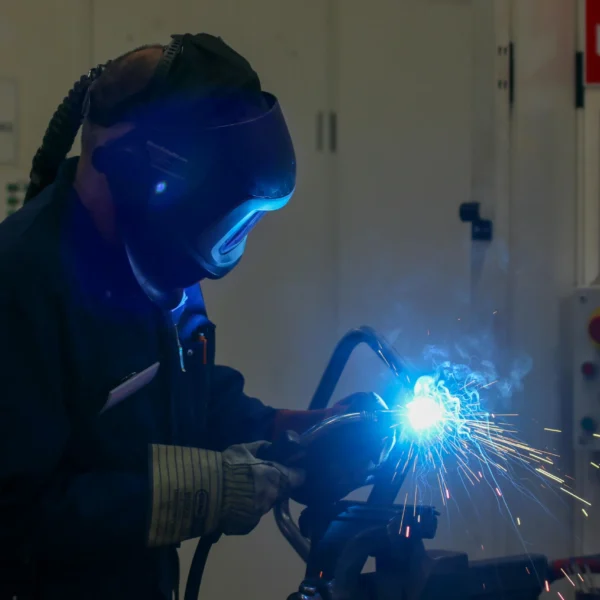
Apprentices will develop the core skills required to manually weld plate and structural components to high industry standards. Training covers a range of manual arc welding processes, including MIG, MAG, FCAW, TIG, PAW and MMA, while also exploring key principles of fabrication, welding and pattern development. Learners will work with multiple material groups such as carbon steel, stainless steel, aluminium, nickel alloys, titanium and copper, gaining valuable experience across a variety of real engineering applications.
This apprenticeship opens doors to a wide range of sectors, including structural steelwork, marine engineering, defence, aerospace, process plant construction, mining, transport and machinery manufacturing. With an industry-aligned curriculum, access to advanced technology and flexible qualification pathways, learners are equipped with the skills, confidence and professional standards needed to thrive as plate welders in organisations of any size. This programme is an excellent starting point for anyone ready to begin a rewarding and skilled engineering career.
Topics may include:
- Preparing and using Metal Inert Gas (MIG), Metal Active Gas (MAG), and Flux Cored Arc Welding (FCAW) equipment
- Preparing and using Tungsten Inert Gas (TIG) and Plasma Arc Welding (PAW) equipment
- Preparing and using Manual Metal Arc (MMA) welding equipment
- Understanding and appliyng fabrication and welding principles
- Pattern development for fabrication projects
- Fabrication, construction, and repair of plate assemblies, extrusions, and structural components, e.g. channels, H beams, I beams
- Working to internationally recognised welding quality standards
- Welding across multiple material groups aligned with employers’ scope of work and requirements of the apprenticeship standard, including carbon steel, low alloy steel, high alloy ferritic/martensitic steel, austenitic stainless steel, nickel and nickel alloys, and more
- Understanding industry applications across sectors such as structural steel fabrication and construction, marine engineering, defence manufacturing, process plant construction, and more.
Assessment Methods
The Level 3 Plate Welder Apprenticeship uses a combination of on programme assessments and a final End Point Assessment (EPA). Throughout training, apprentices must demonstrate the required knowledge, skills and behaviours while completing on programme activities and guided learning, including meeting the 20% off the job training requirement. Progress is monitored through regular competency checks and portfolio development.
At the end of the programme, apprentices complete the EPA, which includes a knowledge test, a practical welding skills test, and a professional discussion supported by a portfolio to confirm full occupational competence.
Progression Options
Career progression from a Level 3 Plate Welder Apprenticeship includes roles such as Plate Welder, Fabricator/Welder, Structural Steel Fabricator, Pipe Welder, Marine or Offshore Welder, and Maintenance Welder.
With experience, learners can advance to Welding Supervisor, Team Leader, Welding Inspector, NDT Technician or Fabrication Workshop Supervisor. Further development may include higher-level engineering qualifications, specialist welding codes, or progression to Higher or Degree Apprenticeships.
Entry Requirements
Typical entry requirements for the Level 3 Plate Welder Apprenticeship include being employed in a suitable welding or fabrication role before starting the programme. Most providers expect learners to have achieved GCSE Grade 4/C or Level 2 Functional Skills in English and maths.
Some employers may also request a science GCSE as part of their recruitment criteria. Where applicants do not meet these requirements, they may be asked to complete an initial assessment or interview to determine suitability for the apprenticeship.

Frequently Asked Questions
You can apply directly on any of the UCS College Group websites, whether you wish to study at Bridgwater College, Cannington College, Strode College, or Taunton College. Simply use our “Find a Course” feature and follow the on-screen instructions – be sure to have your important information to hand.
We aim to offer a careers service that is accessible to everyone. We will seek to equip all our students with the skills and knowledge that will enable them to operate confidently, effectively, and independently in life and work. All students have the opportunity to meet with a Careers Advisor for 1:1 career support.
The Student Experience Team can mentor and signpost students who are struggling with a range of issues that are negatively impacting their day-to-day life. The Student Experience Team works closely with the Safeguarding & Lifestyle Teams to promote proactive wellbeing enrichment sessions. The team can refer on to counselling when appropriate.
We provide top-quality workshops and teaching areas across our Colleges for subjects such as art, design and media, hair and beauty, catering, automotive engineering and construction. You can review our campus facilities by navigating to the “College Life” section of our websites.
For us, the success of our students always comes first. By investing in our built environment, we are investing in your future.
All of our students will have a personal tutor to support them with their academic progress and personal development. The tutorial programme consists of 1:1 support, group tutorials and guest speakers, plus targeted online resources which complement the UCS College Group Advantage scheme.
The Safeguarding Team can offer advice and guidance on anything that may be affecting your young person and their studies – no problem is too big or too small!
Please email our Safeguarding team at staysafe@ucscollegegroup.ac.uk. If you query is urgent, please come to the College Reception and ask to speak to a Safeguarding Officer.
If you cannot find an answer to your question in this FAQ section, you can ask us a question by visiting our Contact Us page.


